googleb1fd7cd7ef71feda.html
Εμφάνιση αναρτήσεων με ετικέτα σελήνη. Εμφάνιση όλων των αναρτήσεων

Σάββατο 30 Μαΐου 2026

Σάββατο 14 Μαρτίου 2026

Astronomy Picture Of The Day: Apollo 17: Gene Cernan and the rover on the Moon


#NASA, #Space, #astronomy, #διάστημα. #Moon
This image, taken by Harrison Schmitt at the end of EVA-3, shows the rover and Gene Cernan, covered in lunar dust. The photograph captures both the challenges and the beauty of working on the Moon: the airless expanse, the bright sunlight, and the endless dusty landscape. The image is not only a monument to the Apollo 17 mission but also a symbol of human courage and the engineering mastery that allowed humans to explore an alien planet in such detail for the first time.

Τετάρτη 18 Φεβρουαρίου 2026

Astronomy Picture of the Day: Spiral Galaxy NGC 2841


#NASA, #Space, #astronomy, #διάστημα,
It is likely that the radiation and supersonic winds from fiery, super-hot, young red stars cleared out the remaining gas (which glows white ), and hence shut down further star formation in the regions in which they were born. NGC 2841 currently has a relatively low star formation rate compared to other spirals that are ablaze with emission nebulae. Credit : NASA - National Aeronautics and Space Administration , ESA - European Space Agency , Hubble Space Telescope

Τρίτη 17 Φεβρουαρίου 2026

Astronomy Picture of the Day: Apollo 13’s Damage Was Far Worse Than Anyone Realized


#NASA, #Space, #astronomy, #διάστημα, #Moon, #Σελήνη

Apollo 13’s Damage Was Far Worse Than Anyone Realized The explosion of oxygen tank No. 2 in Sector 4 of the Service Module (SM) on April 13, 1970—triggered by a short circuit during a routine stir—ripped through the spacecraft with devastating force. What began as a routine mission to Fra Mauro crater became humanity's most famous
near-disaster.As the crippled Apollo 13 approached Earth on April 17, 1970 (just hours before reentry), the crew jettisoned the now-useless Service Module. From the docked Command Module (Odyssey) and Lunar Module (Aquarius) "lifeboat," astronauts Jim Lovell, Jack Swigert, and Fred Haise turned to photograph the departing wreckage. What they captured was shocking: an entire outer panel (Bay 4) had been completely blown away, exposing a mangled interior of torn multi-layer insulation (MLI), dangling wires, shattered components, and debris floating in the void.The iconic images—primarily NASA frame AS13-59-8500 (and variants like AS13-58-8459)—reveal the stark reality: the explosion had vented one oxygen tank entirely and damaged the other, crippled two of the three fuel cells (leaving only one operational briefly), and severed critical plumbing and wiring. Bright MLI blankets protrude like ragged flags, while the high-gain S-band antenna and other structures show heavy damage forward of the engine nozzle. The Moon looms faintly in the background of some shots, a silent witness to the peril.Engineers on the ground had pieced together the crisis from telemetry and crew reports, but these raw photographs—taken from roughly 100–200 meters away—provided the first visual confirmation of the scale. The missing panel alone confirmed fears of widespread structural compromise, yet miraculously, the Command Module's heat shield and reentry systems remained intact, allowing the crew's safe splashdown in the Pacific.This haunting view of the mangled Service Module drifting away stands as one of the most powerful symbols in spaceflight history: a stark testament to how razor-thin the margin was between catastrophe and survival, and how human ingenuity, teamwork (both in space and on the ground), and sheer determination turned "Houston, we've had a problem" into a triumphant return home Image credits: NASA (original Hasselblad frames and remastered versions by Andy Saunders / ASU); public domain archival photos showing the severely damaged Service Module post-jettison.

Τετάρτη 10 Σεπτεμβρίου 2025

Τρίτη 2 Σεπτεμβρίου 2025

Σάββατο 15 Μαρτίου 2025

Astronomy Picture Of The Day: Moon Pi and Mountain Shadow


#NASA, #Space, #astronomy
 

Explanation: What phase of the Moon is 3.14 radians from the Sun? The Full Moon, of course. Even though the Moon might look full for several days, the Moon is truly at its full phase when it is Pi radians (aka 180 degrees) from the Sun in ecliptic longitude. That's opposite the Sun in planet Earth's sky. Rising as the Sun set on March 9, 2020, only an hour or so after the moment of its full phase, this orange tinted and slightly flattened Moon still looked full. It was photographed opposite the setting Sun from Teide National Park on the Canary Island of Tenerife. Also opposite the setting Sun, seen from near the Teide volcano peak about 3,500 meters above sea level, is the mountain's rising triangular shadow extending into Earth's dense atmosphere. Below the distant ridge line on the left are the white telescope domes of Teide Observatory. Today, March 14 2025, the moon is Pi radians from the Sun at exactly 06:55 UTC. That's about three minutes before the midpoint of the March Full Moon's total lunar eclipse.

https://apod.nasa.gov/apod/ap250314.html
Πέμπτη 26 Δεκεμβρίου 2024

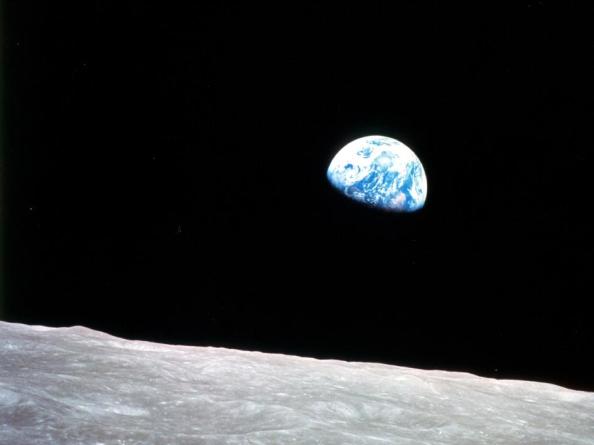
Astronomy Picture Of The Day: Apollo 8: Χριστούγεννα στη Σελήνη!!!

Από την αποστολή του Απόλλων 8 προέκυψε και η διάσημη φωτογραφία της «ανατολής» της Γης.
#NASA , #Space ,#astronomy, #Christmas, #moon , #Apollo8
Παραμονή Χριστουγέννων 1968. Οι αστροναύτες του Απόλλων 8 – Frank Borman, Jim Lovell και Bill Anders – έγιναν οι πρώτοι άνθρωποι που μπήκαν σε τροχιά γύρω από τη Σελήνη.
Από την αποστολή του Απόλλων 8 προέκυψε και η διάσημη φωτογραφία της «ανατολής» της Γης. Το Απόλλων 8 εκτοξεύθηκε στις 21 Δεκεμβρίου και την παραμονή Χριστουγέννων αφού πραγματοποίησε 10 περιστροφές γύρω από τη Σελήνη (διάρκειας 20 ώρες και 10 λεπτά), ολοκληρώθηκε η αποστολή του.
Το πρωί των Χριστουγέννων πυροδοτήθηκε η μηχανή και το Απόλλων 8 εγκατέλειψε την σεληνιακή τροχιά. Το Απόλλων 8 προσθαλασσώθηκε στον Ειρηνικό ωκεανό στις 27 Δεκεμβρίου.
Οι Borman, Lovell και Anders ήταν οι πρώτοι άνθρωποι στην ιστορία, που έφθασαν στη Σελήνη – περιστράφηκαν γύρω της – και επέστρεψαν ασφαλείς στη Γη. Το όνειρο του Ιουλίου Βερν που περιέγραψε στα μυθιστορήματά του «Από τη Γη στη Σελήν» (1865) και «Γύρω από τη Σελήνη» (1870) είχε γίνει πραγματικότητα.
Ο Ιούλιος Βερν μεταξύ άλλων σ’ αυτά τα μυθιστορήματα προέβλεψε ότι η πρώτη εκτόξευση ανθρώπων προς τη Σελήνη θα γίνει στη Φλόριντα των ΗΠΑ, προέβλεψε τον ακριβή αριθμό αστροναυτών στη σεληνάκατο (τρεις) και με μεγάλη προσέγγιση τις διαστάσεις και το βάρος της σεληνακάτου, αλλά και την επιστροφή με προσθαλάσσωση στον Ειρηνικό Ωκεανό – στην περίπτωση του «Απόλλων 8» με σφάλμα 4 μόλις χιλιομέτρων!
https://bit.ly/3ZUwShK

Κυριακή 17 Νοεμβρίου 2024

Astronomy Picture Of The Day: Apollo 12 and Surveyor 3


#NASA, #Apollo12,  #NASA , #Space ,#astronomy, #lunar_surface

Explanation: Put on your red/blue glasses and gaze across the western Ocean of Storms on the surface of the Moon. The 3D anaglyph features Apollo 12 astronaut Pete Conrad visiting the Surveyor 3 spacecraft in November of 1969. Surveyor 3 had landed at the site on the inside slope of a small crater about 2 1/2 years earlier in April of 1967. Visible on the horizon beyond the far crater wall, Apollo 12's Lunar Module Intrepid touched down less than 200 meters (650 feet) away, easy moonwalking distance from the robotic Surveyor spacecraft. This stereo image was carefully created from two separate pictures (AS12-48-7133, AS12-48-7134) captured on the lunar surface. They depict the scene from only slightly different viewpoints, approximating the separation between human eyes.

https://apod.nasa.gov/apod/ap241115.html